
5 Myths About Epoxy Flooring (That Were True 20 Years Ago)

Epoxy Flooring myths are everywhere and most of them come from outdated materials and old installation methods.
In this post, we’ll break down the most common epoxy flooring myths and explain what has changed with modern coating systems.
If you’ve ever heard someone say “epoxy floors peel,” “they turn yellow,” or “they don’t last in Florida,” you’re not wrong those problems used to be very real.
But epoxy flooring has evolved dramatically over the last two decades.
Modern coating systems are stronger, longer lasting, and far more resistant to heat, moisture, and wear than the epoxy floors installed years ago. Unfortunately, many homeowners still judge today’s systems based on outdated experiences.
Let’s clear that up.
Below are five common epoxy flooring myths that used to be true and why they no longer apply.
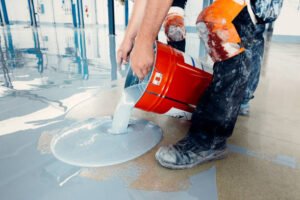
Myth #1: Epoxy Floors Always Peel
Then:
Early epoxy installations often failed because:
- Minimal or no surface preparation
- No concrete grinding or profiling
- Coatings applied over moisture contaminated slabs
The result? Poor adhesion and peeling within a few years.
Now:
Modern epoxy and polyaspartic systems rely on:
- Professional diamond grinding
- Moisture testing
- Multi layer coating systems designed to bond permanently to concrete
When installed correctly, today’s floors chemically bond to the concrete, making peeling extremely rare.
Myth #2: Epoxy Turns Yellow Over Time
Then:
Older epoxies were not UV stable. Sunlight exposure caused:
- Yellowing
- Fading
- Uneven discoloration
This was especially common in garages with windows or open doors.
Now:
Modern systems use UV-stable topcoats designed to resist sunlight exposure.
Today’s finishes maintain their color and gloss for years — even in bright Florida sun.
Myth #3: Epoxy Is Slippery and Unsafe
Then:
High-gloss, single-coat epoxy floors could become slick when wet.
Now:
Modern installations include:
- Decorative flake systems
- Textured finishes
- Slip-resistant topcoats
These upgrades dramatically improve traction while still delivering a clean, professional look.
Myth #4: Epoxy Doesn’t Hold Up in Hot, Humid Climates
Then:
Moisture vapor coming through concrete slabs caused many older floors to fail — especially in coastal and Gulf Coast regions.
Now:
Today’s systems account for:
- Moisture mitigation
- Faster curing times
- Climate-specific materials designed for heat and humidity
This makes modern epoxy and polyaspartic coatings well-suited for Florida garages, patios, and commercial spaces.
Myth #5: Epoxy Flooring Is “Outdated”
Then:
Epoxy floors were basic, flat, and purely functional.
Now:
Modern coating systems offer:
- Decorative flake blends
- Custom colors
- Seamless, high-end finishes
Epoxy and polyaspartic floors are now used in:
- Residential garages
- Showrooms
- Workshops
- Commercial and industrial facilities
They’re no longer just practical — they’re aesthetic upgrades.
Why This Matters for Homeowners
Many homeowners avoid epoxy flooring because of old information.
If your opinion is based on a garage floor installed 15–20 years ago, you’re not seeing what modern systems can do. Today’s installations last longer, look better, and perform far beyond early epoxy technology.
Once you understand the truth behind these epoxy flooring myths, it becomes clear why today’s floors last longer and look better than ever.
The biggest factor?
Professional surface preparation and proper installation
Thinking About Upgrading Your Garage or Concrete Floors?
At Gulf Coast Surface Solutions, we specialize in modern concrete coating systems designed for durability, appearance, and Florida conditions.
Whether you’re replacing a failing floor or upgrading bare concrete, we’ll walk you through your options and help you choose the right system for your space.
Contact us today for a free estimate and consultation.
I like the helpful info you provide in your articles.
I will bookmark your blog and test once more right here frequently.
I am fairly certain I will be informed a lot of new stuff right here!
Best of luck for the next!